Pleated blind or roller blind? An honest comparison
Pleated blind or roller blind — which suits your window better? We compare light control, mounting, care and price honestly, from real-world practice.
Pleated blind or roller blind — we hear this question at almost every appointment. Both are popular, both are practical for everyday life, and yet they suit different windows and needs. Here's the honest comparison from practice.
The basic difference
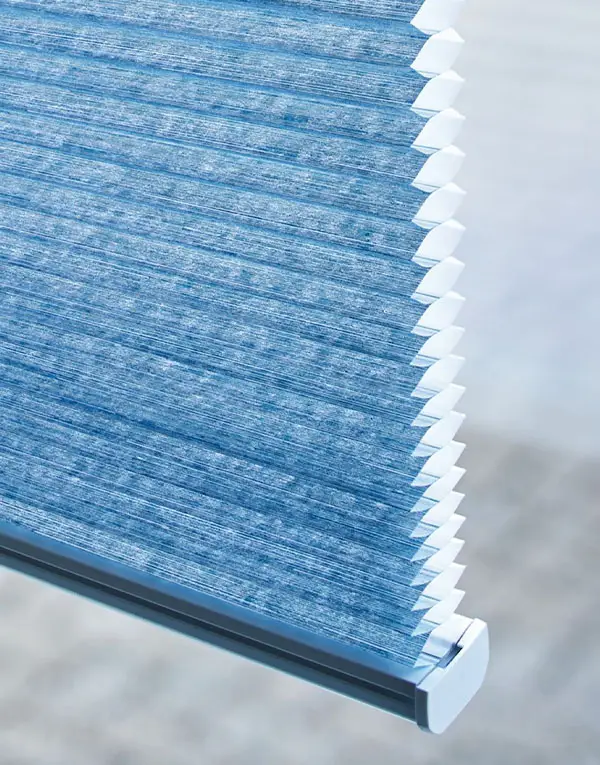
A roller blind is a smooth length of fabric wound onto a tube. A pleated blind is a finely folded fabric that pushes together like an accordion — which means it can be adjusted from the top and the bottom.
That mobility is the most important difference: with a pleated blind you can free up the middle of the window and cover top and bottom. A roller blind always runs from top to bottom.
When a pleated blind?
- For roof windows, triangles or special shapes — the pleated blind follows almost any geometry.
- When you want to cover flexibly (e.g. only the lower third for privacy).
- When you need blackout and insulation: the honeycomb pleated blind forms an insulating air cushion.
When a roller blind?
- For classic, rectangular windows where it should look plain and calm.
- When budget is the priority — often a little cheaper in the base version.
- For large areas where a single smooth length of fabric looks especially tidy.
For maximum blackout the same rule applies to both: side guide rails decide the residual light at the edges — not the fabric alone.
Conclusion
There's no "better" — only "a better fit". Pleated blinds win on flexibility and special shapes, roller blinds on calm looks and price. The easiest way to decide is right at the window: we come to measure up for free and show you both in the real light of your room.